Renal cell carcinoma disseminates predominantly through hematogenous pathways. Left-sided primaries have been associated with inferior outcomes, though mechanisms remain poorly characterized.
Contralateral spread through Batson venous plexus has been postulated, but its incidence has not been well studied.
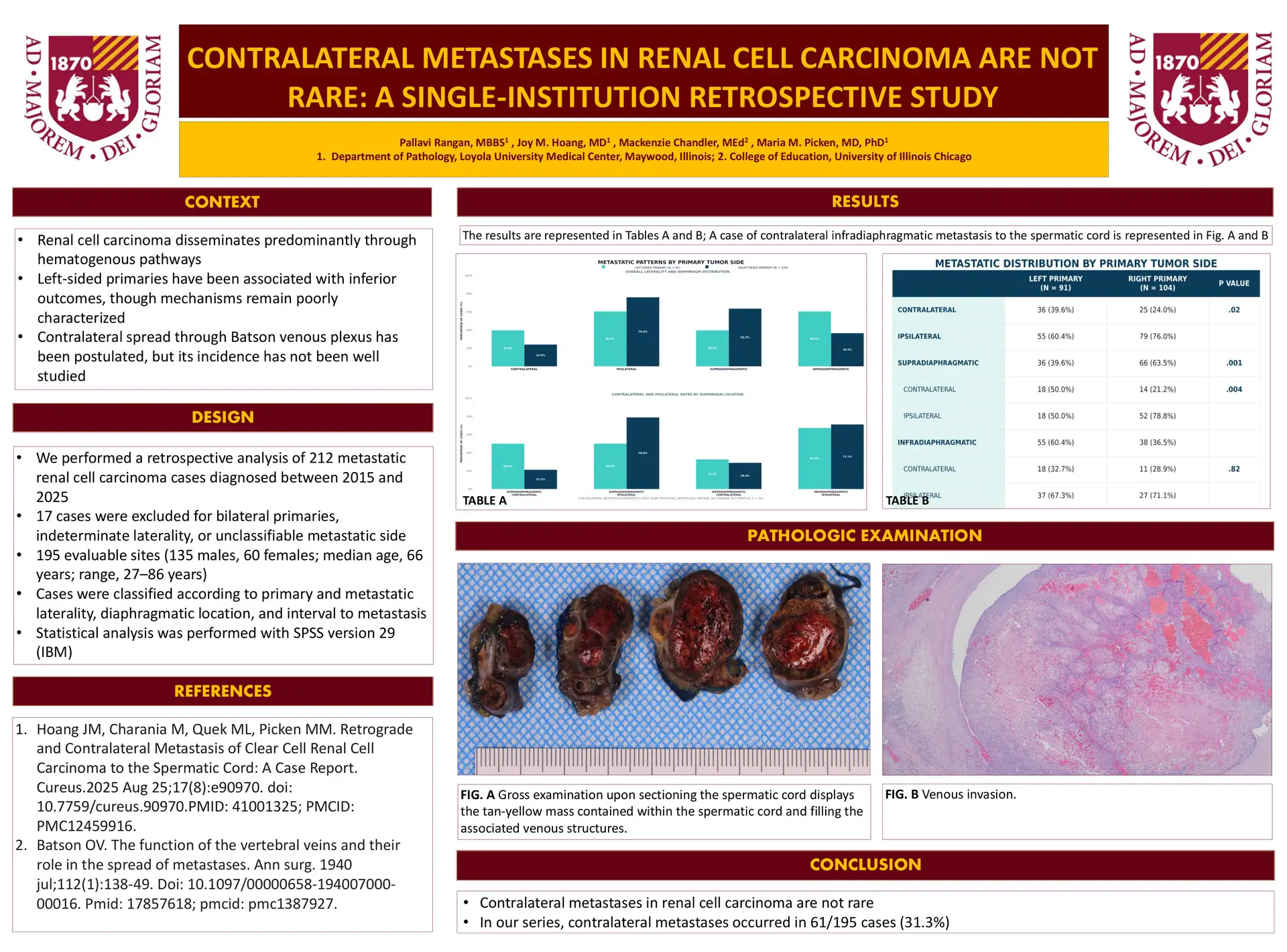
We performed a retrospective analysis of 212 metastatic renal cell carcinoma cases diagnosed between 2015 and 2025. There were 91 left-sided and 104 right-sided primaries. Contralateral metastases occurred in 61 of 195 sites (31.3%). Left-sided primaries had a higher contralateral rate (36/91 [39.6%] versus 25/104 [24.0%]; odds ratio [OR] 2.07; P = .02) and greater propensity for infradiaphragmatic metastases (55/91 [60.4%] versus 38/104 [36.5%]; OR, 2.65; P = .001). Among supradiaphragmatic metastases, left-sided primaries more often demonstrated contralateral spread (18/36 [50.0%] versus 14/66 [21.2%]; OR, 3.71; P = .004). Infradiaphragmatic contralateral rates did not differ significantly (18/55 [32.7%] versus 11/38 [28.9%]; P = .82). Contralateral metastases presented later than ipsilateral metastases (median, 49.5 versus 26.0 months; P = .02)